What a Foot Fracture Says About Your Bone Health
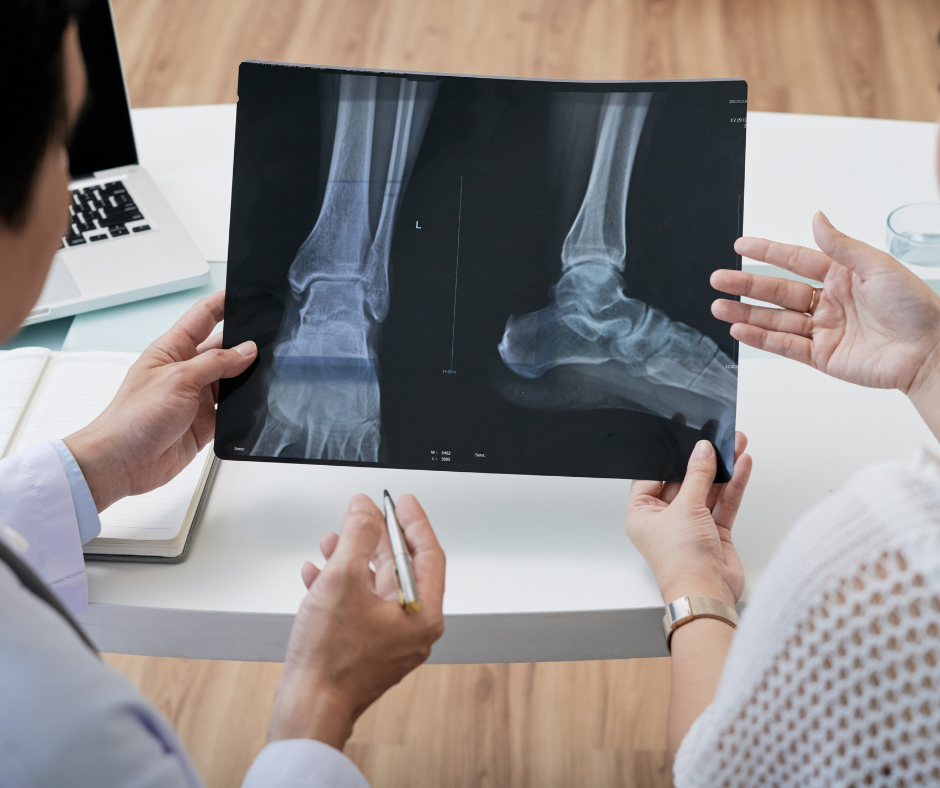
You hear the snap, feel the pain, and soon enough, an X-ray confirms you have a fracture in your foot or ankle. While your immediate focus is likely on the cast, the crutches, and the recovery time, a fracture might be a loud wake-up call from your skeletal system. Here’s what your foot fracture might be trying to tell us at PodiatryCare, PC, and the Heel Pain Center.
What Your Foot Fracture Might Mean
Not all fractures are created equal. If you fell from a significant height or were in a high-impact accident, the break is easy to explain. But if you suffered a fracture from a minor trip or a relatively low-impact movement, it might be a sign of underlying bone fragility.
This is especially true for stress fractures. If you are dealing with a stress fracture in your metatarsals or your heel bone, it suggests that your bones are not remodeling fast enough to keep up with the daily wear and tear.
This can be an early warning sign of osteopenia or osteoporosis, where your bone density has thinned out enough to make you vulnerable to injury from everyday activities.
Your Feet as Windows to Bone Health
Your feet are often the first place where systemic bone issues show up. Because they bear the full weight of your body with every single step, the 26 small bones in your feet are under constant stress.
If your overall bone health is declining due to a lack of calcium, vitamin D, or hormonal changes, the high-pressure zones in your midfoot and ankles are usually the first to give way.
Inflammatory conditions like rheumatoid arthritis can also weaken the bone structure around your joints. If you notice that you are sustaining multiple fractures or that a relatively minor injury resulted in a complex break, it is a sign that your bone quality needs a closer look.
Acting Beyond the Cast
A foot fracture is an opportunity for you to take a proactive approach to your long-term mobility. While the bone is healing, you can work with a podiatrist to evaluate your nutritional intake and hormonal balance.
Focusing on a diet rich in bone-building nutrients like leafy greens for vitamin K2 and fatty fish for vitamin D is a great start.
This is also the perfect time to discuss a bone density scan to see how your feet compare to the rest of your skeleton.
At PodiatryCare, PC, and the Heel Pain Center, we care for a wide variety of foot and ankle ailments. Dr. Matthew Tschudy, Dr. Rebecca Wiesner, Dr. Kristen Winters, Dr. Laura Vander Poel, and the rest of our team are ready to serve our Hartford County patients. To schedule an appointment at our Enfield location, call (860) 741-3041; for an appointment at our South Windsor location, call (860) 644-6525.