What to Do if You Notice Your Feet Are Swollen
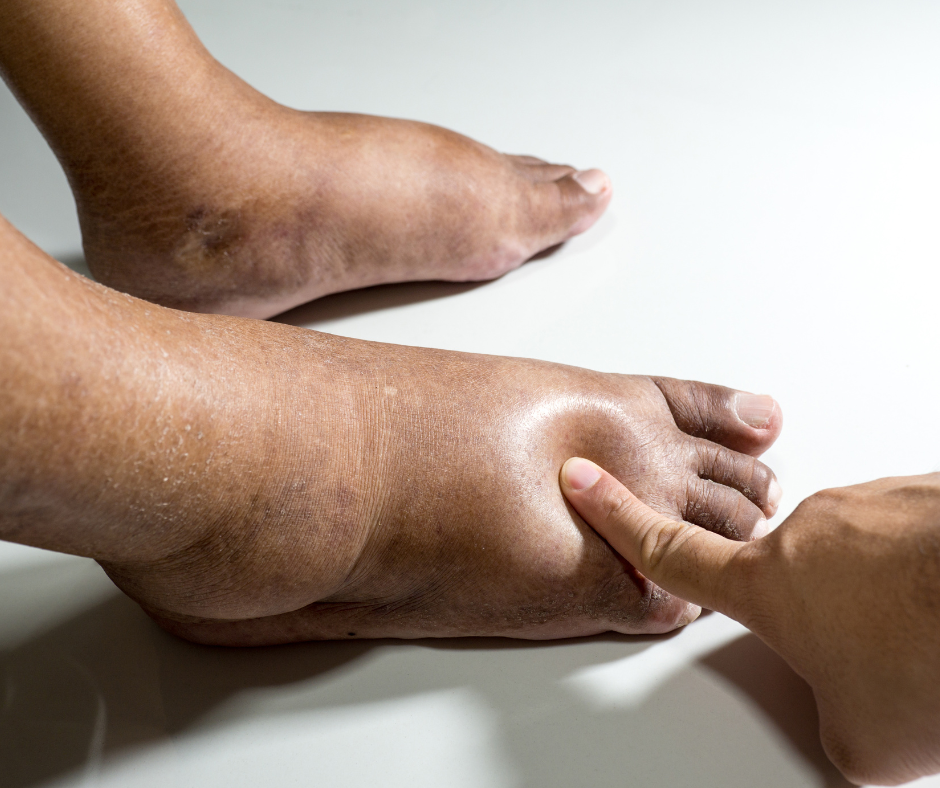
While it can be startling to see your feet change shape, swelling is a common way your body signals that fluid isn't moving quite right. But it could also be a sign of a heart issue.
If you’ve noticed your feet and ankles are looking larger than normal, here is what we at PodiatryCare, PC, and the Heel Pain Center think you should do next.
The 5-Second Press Test
The first thing you should do is determine what kind of swelling you’re dealing with. Reach down and press your thumb firmly into the swollen area, right on the shin bone or the ankle, for about five seconds. When you lift your thumb, look at the skin.
If it bounces back immediately, it’s likely a local issue or minor inflammation. However, if your thumb leaves a pit or a dimple that stays there for several seconds, you are looking at pitting edema.
This is a sign that there is fluid trapped in your tissues. This is the clue you’ll want to mention to a podiatrist, as it helps us narrow down whether the issue is with your heart, kidneys, or veins.
Get Your Feet Above Your Heart
First, you need to get your ankles above the level of your heart. Lie down on the couch and prop your feet up on a stack of three or four pillows. If the swelling goes down significantly, it’s a good sign that your circulatory system just needed a little help fighting gravity. If it doesn't budge, the fluid might be trapped by something more complex.
Check Your Salt and Water Balance
If you’ve had a particularly salty meal, your body will hold onto extra water to dilute that sodium. This extra volume often ends up in your feet.
If you notice swelling, try to significantly increase your water intake for the next 24 hours and cut back on processed salts. Flushing your system can often reset your fluid balance and bring your ankles back to their normal size by the next morning.
Look for One-Sided Warning Signs
While you’re checking your feet, pay close attention to whether the swelling is symmetrical.
Both sides usually point to a systemic issue like heart health, salt intake, or long-term standing.
One side only: This is a red flag. If only one leg is swollen, especially if it’s accompanied by pain, redness, or warmth, it could be a sign of a blood clot or a localized infection.
When to Call the Pros
If the swelling doesn't go away after a night of elevation, or if you feel short of breath and unusually tired, it’s time to schedule an appointment. Your feet are excellent early-warning systems for your heart and circulation, and catching a circulation issue early makes it much easier to manage.
At PodiatryCare, PC, and the Heel Pain Center, we care for a wide variety of foot and ankle ailments. Dr. Matthew Tschudy, Dr. Rebecca Wiesner, Dr. Kristen Winters, Dr. Laura Vander Poel, and the rest of our team are ready to serve our Hartford County patients. To schedule an appointment at our Enfield location, call (860) 741-3041; for an appointment at our South Windsor location, call (860) 644-6525.