Why Is My Toe Bending?
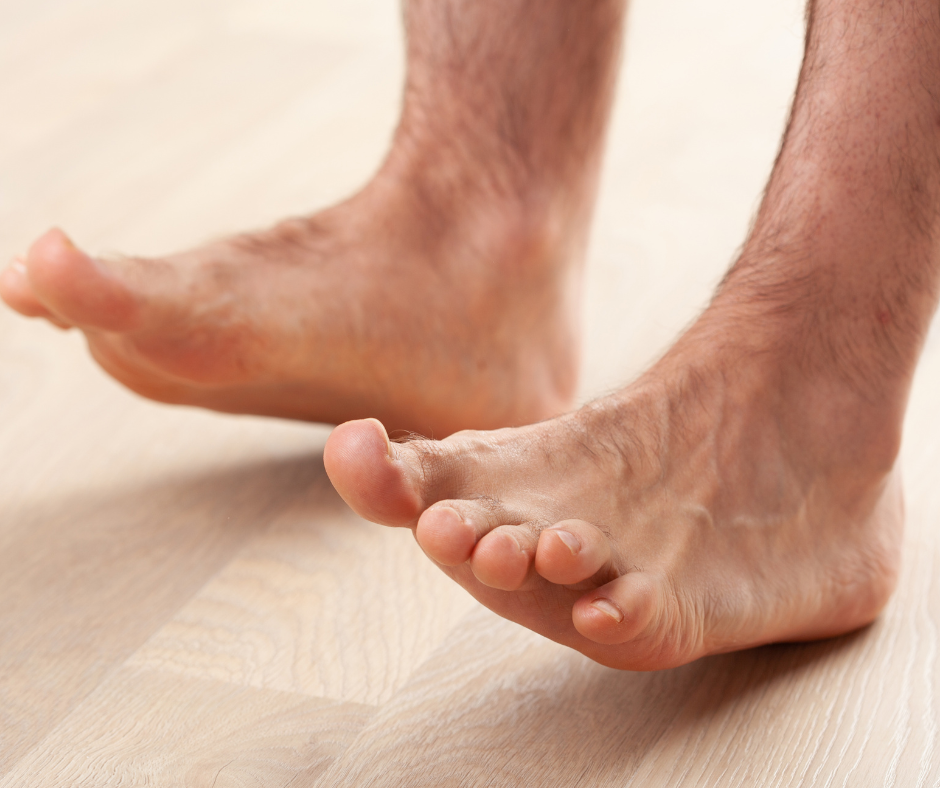
The Tug-Of-War Inside Your Foot
If you have noticed that your second, third, or fourth toe is starting to curl downward like a claw, you might be tempted to blame it on a bad pair of shoes or simply getting older.
However, your toe is not just randomly bending. Underneath the skin, a microscopic, relentless tug-of-war is happening between the tendons in your foot—and right now, the wrong side is winning.
This condition is known as a hammertoe. If you do not understand the mechanics behind why it is happening, it becomes incredibly difficult to stop the progression. In this blog, Podiatry Care, P.C and the Heel Pain Center cover both why your toe is buckling and how to manage the pain at home. We’ll also explain the warning signs that signal it is time to seek professional care.
What Exactly Is a Hammertoe?
Think of your toes like marionette puppets controlled by strings.
· You have tendons running along the top of your foot that pull your toes up, and tendons running underneath that pull them down.
· When your foot mechanics are perfectly balanced, these "strings" have equal tension, keeping your toes perfectly straight.
· A hammertoe forms when that mechanical balance is destroyed. Often, due to flat feet, high arches, or years of wearing cramped footwear, one tendon becomes far stronger than the other.
· The stronger tendon overpowers the weaker one, forcibly pulling the middle joint of the toe upward and the tip of the toe downward.
Once that joint is pushed out of alignment, the tug-of-war is lost. The joint becomes stuck in an inverted V-shape, leaving the top of your toe to rub against the roof of your shoes.
Three Warning Signs the Deformity Is Worsening
Hammertoes are progressive. They will never straighten out on their own, and ignoring the structural imbalance only allows the tendons to grow tighter.
Here are three clear signs your condition is advancing:
The Joint Is Becoming Rigid: In the early stages, a hammertoe is "flexible," meaning you can still use your fingers to manually straighten the toe and press it flat. If the joint feels stiff and you can no longer physically push it down, the deformity has become "rigid," and the joint is permanently contracted.
Painful Corns Are Forming: As the buckled joint creates relentless friction against the top of your shoe, your body responds by building up thick, hard layers of dead skin to protect the bone. These painful corns act like hard pebbles pressing directly into your nerve endings with every step.
Changes To Your Stride: If you find yourself subconsciously shifting your weight to the outside of your foot or limping to avoid putting pressure on the ball of your foot, the hammertoe is beginning to alter your entire kinetic chain.
DIY Management: How To Slow the Progression
If your hammertoe is still flexible, there are several conservative, at-home strategies you can immediately deploy to manage the pain and slow the tendon contraction:
Swap Your Toe Box: Throw away any footwear with a tapered, pointed front. You must switch to shoes with a wide, deep toe box that provides at least a half inch of clearance above your toes so the buckled joint experiences zero friction.
Utilize Hammertoe Crest Pads: Like toe spacers, these over-the-counter silicone or felt pads sit directly underneath the toes, gently lifting the tip and relieving pressure on the contracted joint.
Tape The Toe: Using medical tape to gently bind the affected toe to the straight, healthy toe next to it (buddy taping) can provide temporary structural support and prevent the joint from buckling further during athletic activities.
When To Call the Specialists
Conservative at-home care can manage the symptoms, but it cannot cure the underlying tendon imbalance. If your hammertoe has become completely rigid, if painful corns are making it impossible to wear closed-toe shoes, or if the friction has caused an open sore to form, it is time to step in.
Our clinics provide advanced biomechanical evaluations to address the root cause of the tug-of-war. Whether we stabilize your foundation with prescription custom orthotics or use minimally invasive procedures to quickly release the tight tendon and restore perfect alignment, we have the specialized solutions you need.