Don’t Hurt Your Feet While Shoveling
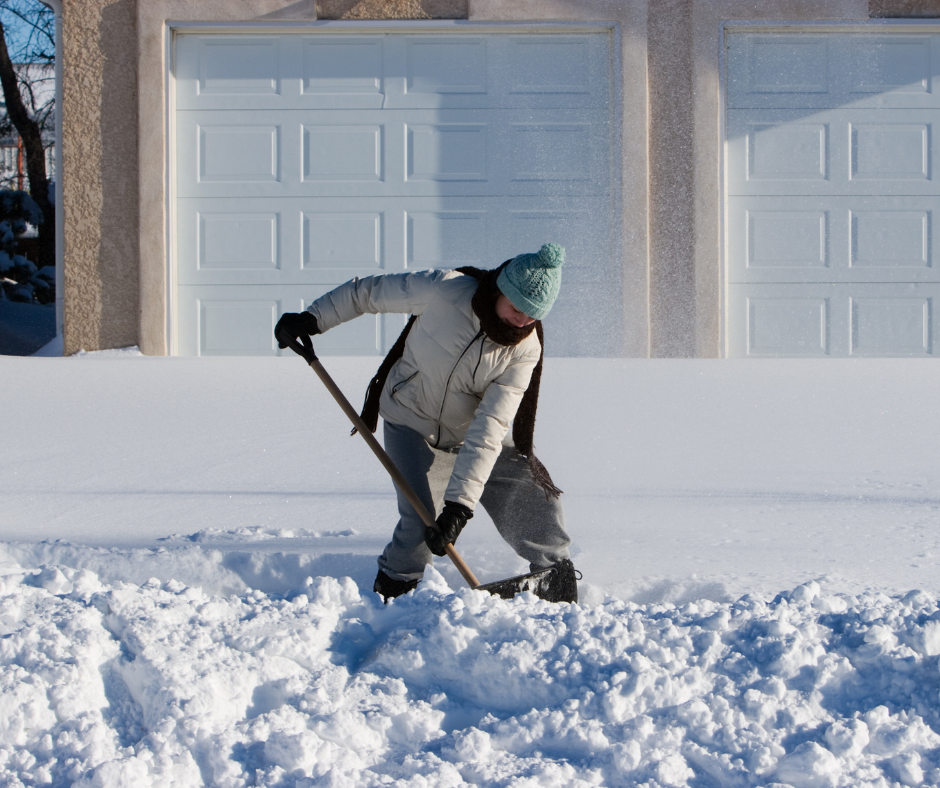
Before you go charging out there to reclaim your pavement, let’s talk about your feet. Most people worry about their lower backs while shoveling, but to us at PodiatryCare, PC, and the Heel Pain Center, your feet and ankles are the ones actually in the trenches.
*Let us remind you: shoveling is a high-intensity workout on an unstable, low-friction surface. If you have existing conditions like Plantar Fasciitis, Ankle Instability, or Diabetes, a standard morning of clearing snow can quickly turn into an injury. Here are four ways to keep your feet grounded after the next snowstorm.
1. Pivot, Don’t Twist
If you have a history of weak ankles or chronic sprains, the most dangerous part of shoveling isn't the lifting, but the throwing. When you load a shovel and then twist your torso to toss the snow to the side, your planted foot could stay stuck in the slush while your ankle takes the full rotational force.
Instead, always keep your nose over your toes. Instead of twisting at the ankle, pivot your entire body by moving your feet.
2. Avoid Heel Pain
For those dealing with heel pain, shoveling in flexible, unsupportive rain boots is a disaster. When you push a heavy shovel, you are essentially performing a high-weight calf press on repeat. This puts tension on the plantar fascia.
If you can bend your boot in half, it isn't strong enough for shoveling. A stiff sole acts as a lever that does the work for your arch, so your fascia doesn't have to bear the brunt of the push.
3. Feel Your Feet
If you have Morton’s Neuroma or Peripheral Neuropathy, the cold is a trigger because it can exacerbate nerve compression. If you lose feeling in your toes while shoveling, you might not notice if you’ve accidentally dropped the shovel on your foot or if you’re developing a pressure sore from a boot that’s too tight.
Instead, use toe warmers, but place them on top of your toes, not underneath. Placing them underneath adds volume to the ball of the foot, which can increase the squeeze on a neuroma.
4. Stay Warm
Once the driveway is clear, don't just sit by the fire. Your feet have been tensed up and cold for an hour.
Perform some active recovery by doing ankle circles and calf stretches. This primes the pump to move stagnant, cold blood out of the feet and prevents the inflammatory shutdown that leads to morning-after stiffness.
At PodiatryCare, PC, and the Heel Pain Center, we care for a wide variety of foot and ankle ailments. Dr. Matthew Tschudy, Dr. Rebecca Wiesner, Dr. Kristen Winters, Dr. Laura Vander Poel, and the rest of our team are ready to serve our Hartford County patients. To schedule an appointment at our Enfield location, call (860) 741-3041; for an appointment at our South Windsor location, call (860) 644-6525.