Can a Massage Gun Fix Chronic Heel Pain?
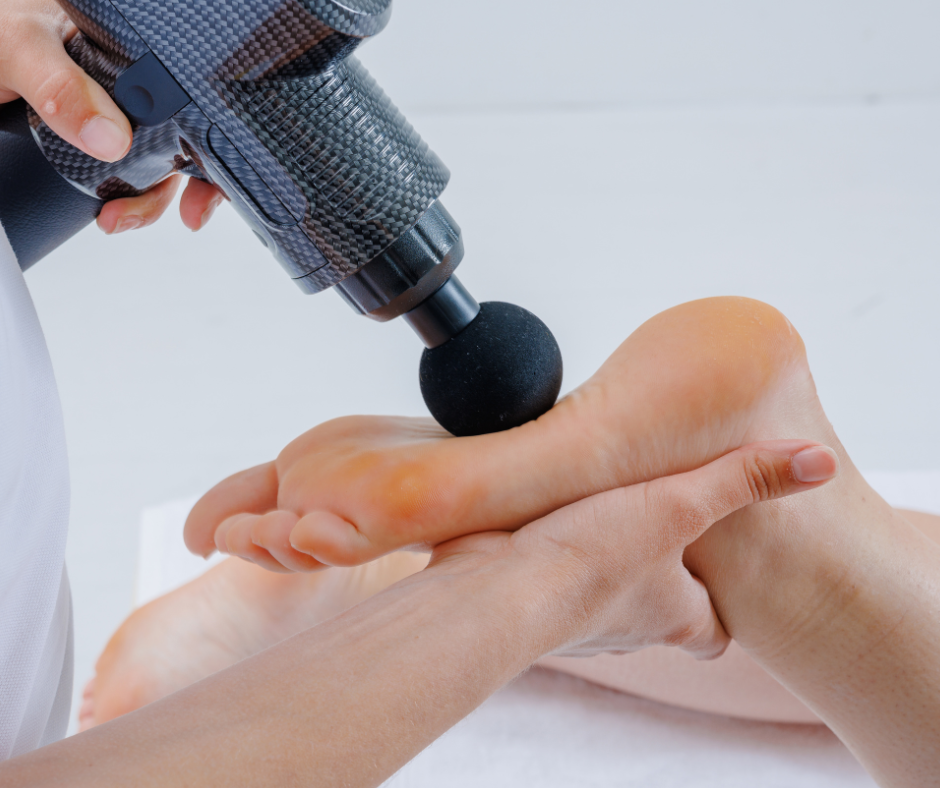
The Difference Between Surface Percussion and Medical Shockwave Therapy
Why isn't my massage gun curing my plantar fasciitis?
If you are dealing with a stubborn sports injury or chronic heel pain, you have probably considered buying one of those wildly popular, high-powered percussion massage guns you see all over social media. While these trendy devices feel great for superficial muscle soreness after a workout, they have a major limitation: they only impact the surface.
When you are battling chronic conditions like plantar fasciitis or Achilles tendonitis, the root of your pain is often thick, degenerated scar tissue buried deep within the ligaments. A surface-level massage cannot break down that internal scarring. To truly reach the damaged tissue and restart the healing process, you do not need a percussive massager; you need the targeted power of acoustic sound waves. PodiatryCare, P.C. and the Heel Pain Center explore the differences below.
What is Medical Shockwave Therapy?
When traditional conservative treatments—like rest, icing, and stretching—have not been effective at relieving your pain, Shockwave Therapy offers a powerful, non-invasive alternative to surgery.
Rather than simply vibrating the skin, Shockwave Therapy works by sending intense, targeted pulses of acoustic sound waves deep into the injured area. This advanced clinical treatment accomplishes three critical things that at-home devices cannot:
Breaks Up Scar Tissue: The intense sound waves physically break down the rigid, fibrous scar tissue that restricts your mobility and causes chronic stiffness.
Forces New Blood Flow: The acoustic pulses trigger micro-trauma at the cellular level, forcing the body to build new blood vessels and flood the notoriously "dry" tendon areas with oxygen-rich blood.
Stimulates Biological Healing: By breaking the cycle of chronic inflammation, the treatment essentially "reboots" your body’s latent healing processes, encouraging local repair cells to lay down new, healthy collagen.
What to Expect: A Zero-Downtime Procedure
One of the reasons this treatment is so highly recommended for active individuals is its convenience. Healing a chronic injury no longer requires prolonged bed rest or painful surgical incisions.
Fast, In-Office Care: The entire procedure is performed right in our office during a standard appointment.
No Mandatory Downtime: There are no surgical wounds to manage, no heavy boots, and no required downtime. You can walk right out of the clinic.
The Recovery Timeline: After the treatment, many patients experience immediate relief from their symptoms. Because the therapy stimulates a biological response, that initial relief generally continues to improve with subsequent treatments over a 3-to-5-week period.
Keeping Athletes Out of the Operating Room
Because our doctors treat many local athletes and weekend warriors, we deeply appreciate advanced, non-invasive treatments that keep our patients out of surgery and back in the game. We see a remarkably high level of successful outcomes using shockwave therapy, especially for those who felt like they were out of options.
If you are experiencing chronic foot and ankle pain, or if you are suffering from a stubborn overuse injury that will not heal, you do not have to live with the discomfort. Schedule an appointment to see us today to determine if you are a candidate!
At PodiatryCare, PC, and the Heel Pain Center, we care for a wide variety of foot and ankle ailments. Dr. Matthew Tschudy, Dr. Rebecca Wiesner, Dr. Kristen Winters, Dr. Laura Vander Poel, and the rest of our team are ready to serve our Hartford County patients. To schedule an appointment at our Enfield location, call (860) 741-3041; for an appointment at our South Windsor location, call (860) 644-6525.