The Invisible Pebble: Understanding Morton's Neuroma
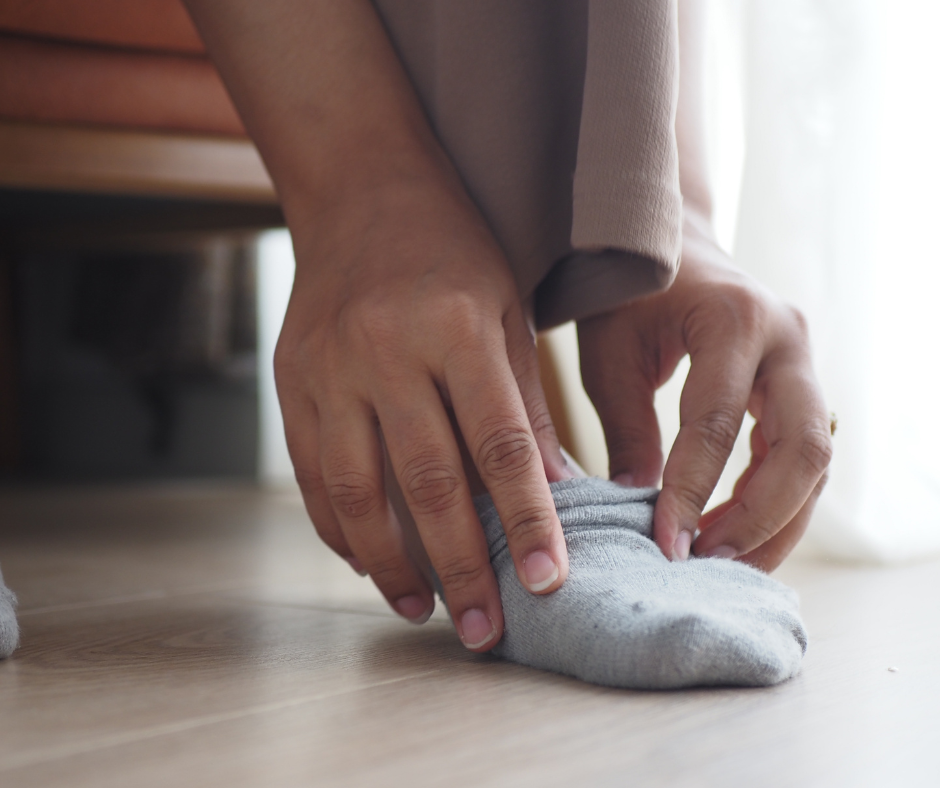
You take a brisk walk and suddenly feel a sharp, burning sensation in the ball of your foot. It feels exactly like you stepped on a jagged pebble or a bunched-up sock. You stop, take off your shoe, and shake it out. Nothing falls out. You put your shoe back on, but the pain returns immediately.
Here’s the thing: the pebble is not in your shoe. The pebble is inside your foot!
This invisible obstruction is a thickened, severely irritated nerve medically known as Morton's Neuroma. Many patients across Hartford County initially ignore the tingling and numbness in their toes, assuming their shoes simply fit poorly. While restrictive footwear certainly plays a role, the root cause ties directly to your underlying biomechanics. Ignoring this progressive nerve damage forces your body to alter your gait, sending harmful stress straight up your Kinetic Chain. PodCare, P.C. and the Heel Pain Center elaborates below.
The Mechanics of Nerve Compression
Morton's Neuroma most commonly develops between the third and fourth toes. Despite the name, it is not a tumor. It represents a progressive thickening of the protective tissue surrounding the digital nerve that leads to your toes.
· When your foot functions properly, the long metatarsal bones sit parallel to one another, leaving plenty of room for the nerve to pass through.
· However, when structural instability collapses your arch, these bones shift inward and aggressively squeeze the nerve.
· Over time, this repetitive friction causes the nerve to swell, creating a painful, inflamed mass that misfires with every single step you take.
The Real Triggers Behind the Swelling
Nerve compression develops due to a combination of internal structural weaknesses and external lifestyle pressures. The most common contributing factors include:
Inherited Foot Structure: Faulty foot mechanics, such as flat feet or highly rigid arches, create immense joint instability. This inherent weakness allows the foot to overpronate, placing excessive, uneven pressure on the forefoot.
Constrictive Footwear: High heels and shoes with narrow, pointed toe boxes act as massive catalysts. Squeezing an already unstable forefoot into an unnatural, cramped angle rapidly accelerates the nerve irritation.
High-Impact Repetition: Repetitive pounding on hard concrete surfaces without adequate structural support actively destroys the natural fat pad protecting the ball of your foot, leaving the nerve entirely exposed to ground forces.
The Domino Effect on Your Kinetic Chain
Foot pain rarely remains isolated. Because your body functions as a tightly packed, interconnected system, a painful nerve in your forefoot disrupts your entire lower body.
· When the ball of your foot hurts, your brain automatically forces you to shift your weight to the outside edge of your foot.
· If you continuously alter your gait to avoid the sharp pain while walking the trails at Nevers Park in South Windsor or commuting along I-91, your knees and lower back must absorb highly unnatural biomechanical stress.
· Ignoring the pinched nerve in your foot inevitably leads to chronic joint instability and severe back pain.
Definitive Medical Interventions
Morton's Neuroma is strictly progressive. An inflamed nerve will never heal, shrink, or reverse itself without clinical intervention. Catching the compression in its early stages provides a wide variety of non-surgical options to eliminate the pain and halt the damage:
Prescription Custom Orthotics: This stands as the gold standard for long-term mechanical control. Medical-grade orthotics actively correct the underlying genetic instability in your arch. By separating the metatarsal bones and controlling overpronation, orthotics stop the bones from crushing the nerve.
Targeted Injection Therapy: For severe and immediate pain, we might use precise injection therapy to cool down the localized fire and shrink the inflamed nerve tissue, providing immediate relief.
Footwear Modification: Transitioning to supportive footwear engineered with a wide, deep toe box completely removes lateral pressure from the forefoot, giving the nerve the physical space it needs to function properly.
Let’s take control and kick that pesky “pebble” to the curb! With a patient-centered treatment plan and the right tools, we’ll stop the pain from holding you back and deliver the clarity you need.
At PodiatryCare, PC, and the Heel Pain Center, we care for a wide variety of foot and ankle ailments. Dr. Matthew Tschudy, Dr. Rebecca Wiesner, Dr. Kristen Winters, Dr. Laura Vander Poel, and the rest of our team are ready to serve our Hartford County patients. To schedule an appointment at our Enfield location, call (860) 741-3041; for an appointment at our South Windsor location, call (860) 644-6525.